

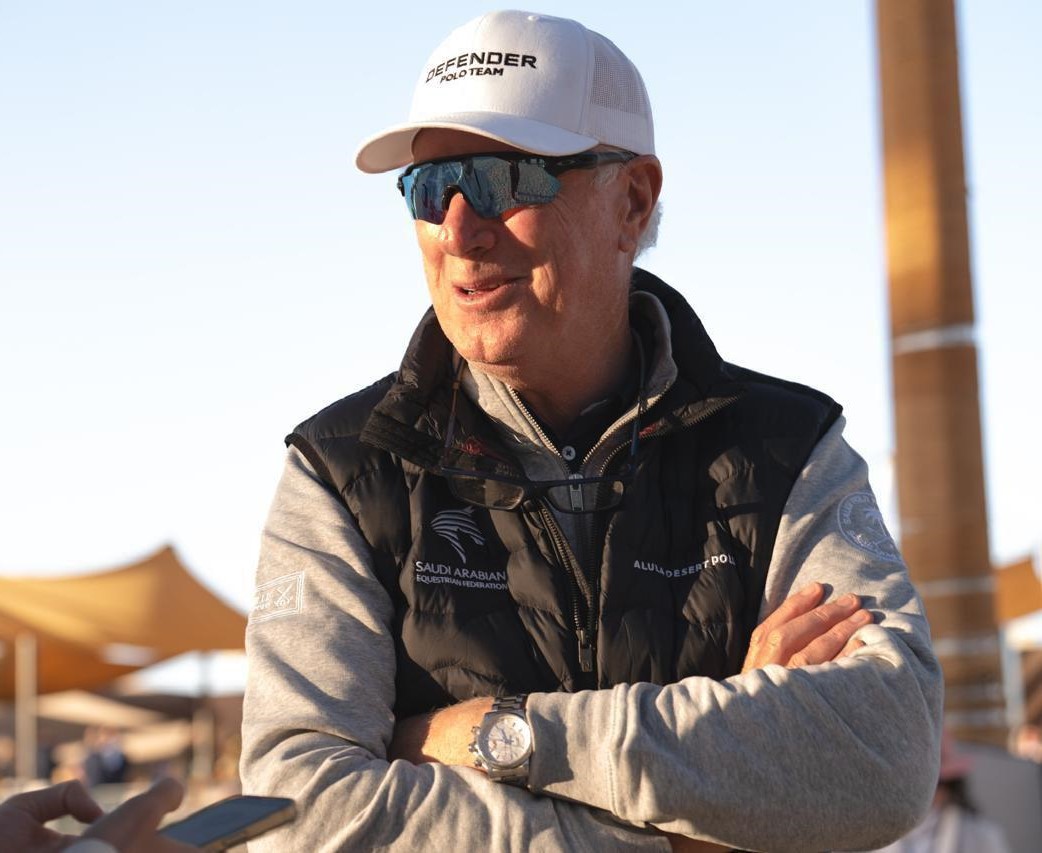
PAUL MCAULEY: THE IRISH HORSEMAN AT THE HELM


(No part of this article may be copied or reproduced in any form without the permission of HT)
MAJOR INTERNATIONAL HORSE SHOWS LOOK EFFORTLESS TO THE UNTRAINED EYE. THE FOOTING IS PERFECT, THE STABLING IS IMMACULATE, THE LOGISTICS ARE SEAMLESS, AND THE HORSES ARE THRIVING. BUT THAT EFFORTLESS PERFECTION DOESN'T HAPPEN BY ACCIDENT, IT’S PLANNED BY THE PEOPLE AT THE HELM.
ENTER PAUL MCAULEY.
WITH A CAREER SPANNING OVER FOUR DECADES ACROSS IRELAND AND THE MIDDLE EAST, MCAULEY IS THE ULTIMATE OPERATIONAL ARCHITECT. HE’S THE QUIET FORCE BEHIND WORLD-CLASS EQUESTRIAN FACILITIES AND COMPETITIONS, DRIVEN BY A SIMPLE, UNCOMPROMISING PHILOSOPHY: HORSE WELFARE ALWAYS COMES FIRST. CURRENTLY IN A NEW ROLE CONTRIBUTING TO THE FUTURE OF GLOBAL EQUESTRIAN SPORT AS A CONSULTANT FOR THE AMBITIOUS ROYAL COMMISSION FOR ALULA IN SAUDI ARABIA, MCAULEY SPOKE WITH HORSE TIMES TO DISCUSS THE EVOLUTION OF THE SPORT, THE LOGISTICS OF ENDURANCE RACING, AND WHY TRUE SUCCESS IS ALWAYS BUILT BEHIND THE SCENES.
Paul, coffee or tea, and how strong are we talking?
I enjoy a medium-strength Americano, nothing too strong, just a good, balanced coffee.
If you didn't have any responsibilities, how would you spend your days?
I would spend my days with my wife, Áine, at our home and farm in Ireland, enjoying the countryside, the wildlife, and the slower pace of life that comes with it. I would love to have the freedom to take the occasional road trip around Europe, discover new places, revisit old favourites, and perhaps play a few rounds of golf along the way. Of course, horses would still be part of my life. Whether that was breeding and raising a few young horses or simply having them around the farm, I don't think you ever truly leave the horse world behind. It has been such a big part of my life that I can't imagine not being involved with it in some way.
1. Onto horse talk now; you have spent more than three decades working across Ireland and the Middle East. How has the international horse industry evolved during your career, and what changes have impressed you the most?
In my opinion, the biggest changes have been in breeding, transportation, and the overall professionalism of the industry. When I started, many of the technologies and systems we now take for granted simply did not exist. Breeding has become far more accessible through the use of artificial insemination, allowing bloodlines to be shared across continents with relative ease. Likewise, transporting horses internationally has become much more efficient, with top competition horses regularly flying around the world to compete. Whether they are racehorses, endurance horses, polo ponies, or showjumpers, international travel is now a normal part of professional careers in the equine space. I have also been impressed by the rise in professional standards across the industry. Facilities, event organisation, veterinary care, and horse welfare have all improved enormously. The sport has become far more professional at every level, and that is something I am very pleased to have witnessed during my career.
2. Your experience spans multiple disciplines, from showjumping, dressage, and eventing to endurance. What are the biggest operational differences when directing events in these very different equestrian worlds?
While each discipline has its own unique requirements, the fundamentals of running a successful event remain remarkably similar. Whether it is showjumping, dressage, eventing, or endurance, the priority is always horse welfare, competitor experience, safety, and delivering a professionally organised event. The biggest operational differences are usually logistical. Showjumping and dressage are largely arena-based disciplines, where footing, course preparation, scheduling, and spectator experience are key considerations. Eventing introduces the added complexity of cross-country courses, requiring extensive planning, course maintenance, safety measures, and a much larger operational footprint. Endurance is different again. It is less about what happens in a competition arena and more about managing horses over long distances and often challenging terrain. Veterinary services, horse welfare protocols, route management, logistics, and coordination across many kilometres become the primary focus. In endurance, the event can cover vast areas and involve hundreds of people working behind the scenes to ensure everything runs smoothly.
3. Behind every successful horse show is a strong organisational structure. What do you believe are the key ingredients for delivering a world-class equestrian event?
A world-class equestrian event is never the result of one person. It is the result of a strong team, clear leadership, attention to detail, and a shared commitment to delivering the best possible experience for everyone involved. First and foremost, you need people who understand horses. Every decision, whether it relates to scheduling, footing, stabling, logistics, or facilities, should be made with horse welfare at the centre. If you get that right, everything else becomes much easier. Communication is equally important. An Event Director must be able to bring together governing federations, officials, riders, owners, grooms, sponsors, staff, and spectators, all of whom have different expectations and priorities. The ability to build trust and maintain strong relationships across all those groups is one of the most important aspects of the job. Attention to detail is another key ingredient. Competitors may only notice a handful of things when they arrive, but they will certainly notice if something has been overlooked. The same applies to spectators. A successful event should not only cater to those competing, but also create an enjoyable experience for the public. Spectators bring atmosphere, energy, and support to the sport, and ensuring they leave with a positive impression is an important part of any event's success. The best events are often the ones where everything appears effortless, because hundreds of people have worked behind the scenes to ensure every detail has been considered. One piece of advice I have always given my teams is simple: if someone comes through our gates smiling, they should leave smiling. Whether I was running a riding school, an equestrian centre, or an international competition, that philosophy never changed. If riders, owners, sponsors, staff, and spectators all feel welcome, valued, and eager to return, then you know you have delivered something special.
4. You have extensive expertise in breeding and raising top-class stock destined for racing. What qualities do you look for when identifying future elite horses at an early stage?
The first thing I look for is natural athleticism. A young horse should have a good frame, correct conformation, particularly in the forelegs and feet, and move freely, efficiently, and with balance. Just as importantly, I look for temperament. A horse can have all the physical attributes in the world, but without the right attitude it is unlikely to fulfil its potential. I like to see a horse that is sensible, willing, trainable, and comfortable with the job it will eventually be asked to do. Elite horses often possess something that is difficult to define but easy to recognise when you see it, a natural presence, intelligence, and an ability to adapt and learn. Of course, identifying potential is only the beginning. Good management, veterinary care, and farrier support all play a crucial role in a horse's development. In many cases, the foundations laid during those early years can make the difference between a good horse and an exceptional one.
5. Stable design is another important part of your work. How do you combine horse welfare, functionality, and modern technology when planning and overseeing equestrian facilities?
When planning an equestrian facility, regardless of its size, the starting point is always the client's brief, the intended purpose of the facility, and the welfare of the horse. There is no single design that suits every operation. A breeding farm, a racing yard, a showjumping facility, and a stallion barn will all have different requirements, and the design must reflect that. For example, stallions are generally best housed in quieter areas where they are less likely to become stressed or distracted by the day-to-day activity of the yard. By contrast, a busy competition yard may require a layout that prioritises efficient movement of horses, staff, and equipment while maintaining a calm and safe environment. Regardless of the discipline, good stable design starts with understanding the horse's physical and psychological needs, then creating a facility that works efficiently for horses, staff, owners, riders, and visitors alike. In terms of design, I generally favour the American barn-style layout, with wide passageways and generously sized stables. Features such as Dutch doors and rear windows help improve airflow and create a more comfortable environment. Horses are naturally social animals, so wherever possible I believe stable partitions should allow them to see and interact with one another while maintaining appropriate safety standards. Ventilation is one of the most important aspects of any equestrian facility. Having spent many years working in the Middle East, I have seen first-hand how critical cooling and airflow systems are in hot climates. In cooler regions, such as Ireland, good air circulation remains equally important, although care must be taken to avoid direct draughts. Technology has become an excellent support tool, but it should never replace good horsemanship. Today it assists with administration, record keeping, horse health monitoring, communication, and overall facility management. Surveillance systems have also become invaluable, helping improve security and providing important information when incidents occur. Used correctly, technology complements good management and ultimately contributes to better horse welfare.
7. Having worked extensively in the Middle East, how have you seen the region's equestrian industry develop over the years, particularly in terms of professionalism and ambition?
When I first arrived in the Middle East in 2005, there was already a deep passion for horses and a busy calendar of equestrian events. However, the industry was still developing in terms of structure, governance, and professionalism. Over the following years, there was a conscious effort across the region to raise standards and create stronger pathways for riders, horses, and officials. Initiatives such as the Group VII World Cup Qualifiers, national competition leagues, and the introduction of training shows played an important role in that development. In particular, training shows provided invaluable opportunities for novice riders, young horses, and aspiring professionals to gain experience and progress through the sport. What has impressed me most is the ambition and willingness to invest in long-term development. Today, the region is home to some of the finest equestrian facilities and events in the world. Standards of organisation, horse welfare, and competition infrastructure continue to improve, and the proof of that success can be seen in the number of international riders who now choose to spend their winter seasons competing here. The Middle East is no longer simply participating in the international equestrian community; in many respects, it is helping to shape its future.
8. Much of your reputation has been built behind the scenes rather than in the spotlight. What motivates you to continue working tirelessly in roles that are often unseen by the public? Could the Albert Einstein quote be your motto, "Try not to be a man of success, but rather try to become a man of values?"
I’ve always been a results-driven person rather than someone focused on recognition, and over the years I’ve realised that my greatest motivation comes from working within a team and helping others achieve success together. Many years ago, I realised that my greatest strengths were not necessarily in the saddle, but on the ground around horses. Whether it was managing stud farms, operating equestrian centres, directing competitions, designing facilities, or supporting my daughters through endurance riding, I found real satisfaction in helping others succeed and watching ideas develop into successful projects. Some of the most rewarding moments in my career have not been the headlines or the trophies, but seeing riders progress, facilities thrive, events grow, and people develop confidence in their abilities. Knowing that I may have played a small role in helping that happen has always been enough motivation for me.
8. After retirement, you chose to return to the industry as an equestrian consultant for the Royal Commission for AlUla in Saudi Arabia. What inspired you to take on this new challenge?
To be honest, I never really retired from horses. I have always remained involved in the industry through consultancy work on private equestrian facilities. Horses have been such a significant part of my life that stepping away completely was never really an option. When I was approached by the Royal Commission for AlUla, what attracted me most was the opportunity to help build something from the ground up. It was an ambitious vision with a long-term commitment to equestrian sport, horse welfare, tourism, and community development. Those are the types of projects I have always enjoyed being involved in. Since joining the Equestrian Development Team, I have had the privilege of helping guide a number of important initiatives, from international events to the development of new facilities. Seeing those projects move from concept to reality has been incredibly rewarding.
9. AlUla is becoming an increasingly important destination for sport, culture, and heritage. What opportunities do you see for equestrian development in the region in the coming years?
The opportunities for equestrian development in AlUla are tremendous, and in many ways, we are only at the beginning of that journey. One of our immediate milestones is the opening of our first dedicated equestrian centre, located alongside the existing competition village. The facility has been designed to support a wide range of activities, including livery services, riding school programmes, equestrian tourism, veterinary care, and farrier services. It represents an important step in creating a sustainable equestrian ecosystem within the region. At the same time, we are continuing to expand our competition infrastructure, including additional stabling facilities ahead of hosting the FEI World Endurance Championship. Looking further ahead, plans for an equine terminal at AlUla International Airport have the potential to strengthen not only AlUla's position but also that of the wider western region of Saudi Arabia as an international equestrian destination. What excites me most is that this development is about much more than hosting events. It is about creating opportunities for local riders, supporting horse ownership and education, promoting tourism, and building an equestrian culture that can be enjoyed for generations to come.
10. Looking back on your remarkable international career, what achievements make you the proudest, and what legacy would you ultimately like to leave within the horse industry?
Professionally, I am proud of every facility, event, and programme I have helped create, develop, or improve throughout my career. From stud farms and equestrian centres to international competitions and training shows, each project has brought its own challenges and opportunities, and each has contributed in some way to the journey. If there is a common thread running through all of them, it is a focus on raising standards, creating opportunities, and always putting the welfare of the horse first. Throughout my career, I have tried to build environments where horses, riders, owners, and staff can all thrive, whether through facilities, events, education, or mentorship.
Personally, without question, the achievements of my daughters in endurance riding are what I am most proud of. Watching them develop their own passion for horses, work hard, and succeed in the sport has been far more rewarding than anything else I have achieved professionally. I remain as interested in the industry today as I ever have been, and I continue to enjoy being involved in projects that move it forward. HT