FROM RAILS TO RED SEA: GUENDA GALIMBERTI’S JOURNEY OF LISTENING


(No part of this article may be copied or reproduced in any form without the permission of HT)
“WHILE YOU TRY TO WIN WITH HORSES IN SHOWJUMPING, YOU LEARN TO LISTEN TO THEM IN THE DESERT. FROM ITALY TO EGYPT, A JOURNEY TO MAKE A DREAM COME TRUE.”
ORIGINALLY FROM ITALY, GUENDA GALIMBERTI HAS SPENT MOST OF HER LIFE WORKING WITH HORSES. AFTER MORE THAN TWO DECADES IN THE COMPETITIVE SHOWJUMPING WORLD, A LIFE CHANGE BROUGHT HER UNEXPECTEDLY TO EGYPT, WHERE A SMALL DESERT RIDING INITIATIVE GRADUALLY EVOLVED INTO EQUESTRIAN DREAM EGYPT ON THE RED SEA COAST.
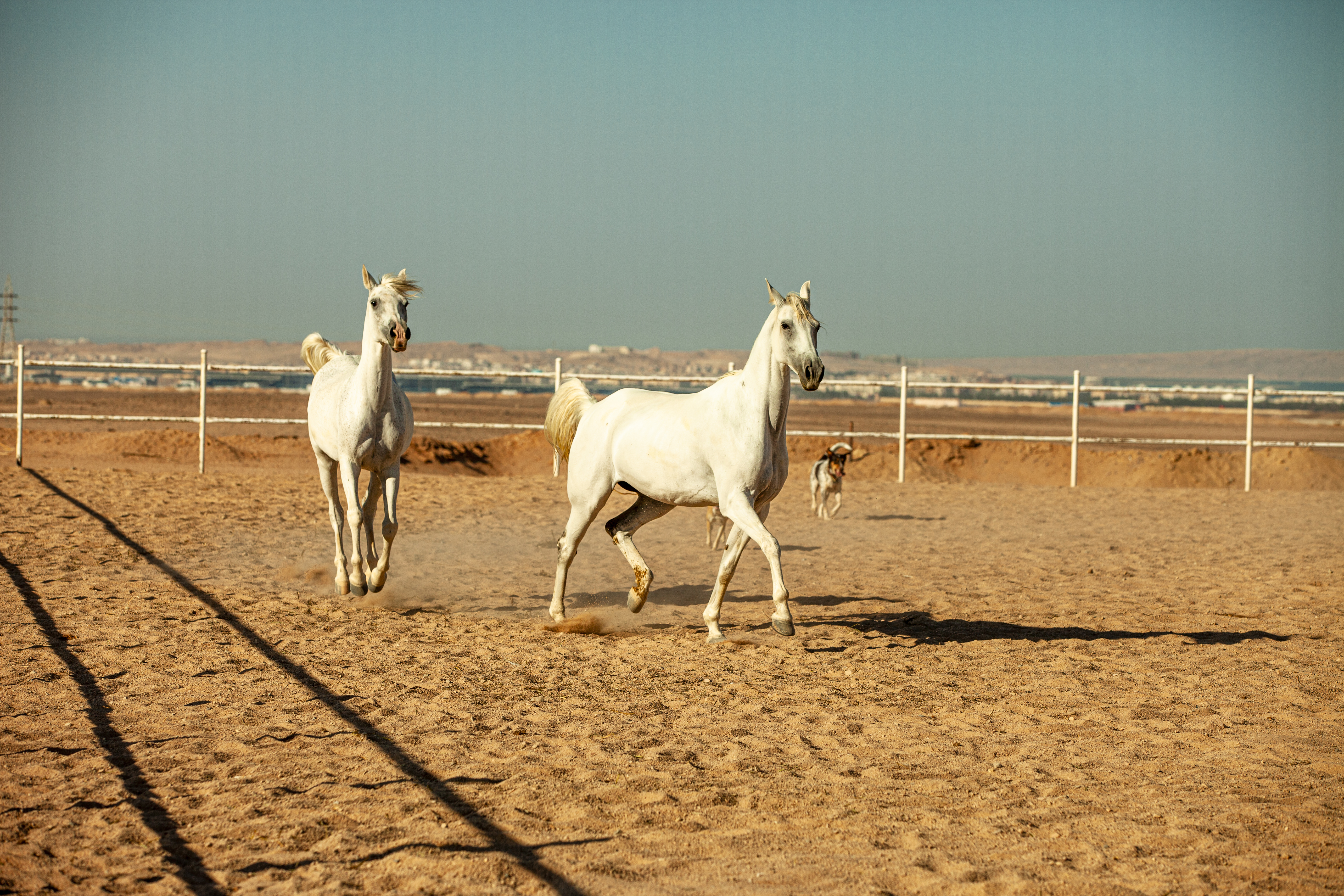
TODAY, HER PROJECT COMBINES LONG-DISTANCE DESERT RIDING WITH THE REHABILITATION OF RESCUED HORSES, MANY OF WHOM COME FROM DIFFICULT BACKGROUNDS. THROUGH PATIENCE, HORSEMANSHIP, AND A DEEP RESPECT FOR THE ANIMALS, GUENDA HAS CREATED A UNIQUE EQUESTRIAN ENVIRONMENT WHERE HORSES, RIDERS, AND THE DESERT LANDSCAPE COME TOGETHER IN A TRULY AUTHENTIC EXPERIENCE. HORSE TIMES SPOKE WITH GUENDA TO ENQUIRE MORE ABOUT HER DREAM COMING TRUE.
1. PROFILE & PERSONAL JOURNEY:
Guenda, can you tell us about your background in Italy and how horses first became part of your life?
My passion for horses has very deep roots in my childhood. I grew up near Milan, and every weekend I would spend my time at a countryside farm where I helped the breeder with the daily care of the horses and other animals. Those early experiences shaped the way I see horses even today: not simply as athletes or tools for sport, but as living partners whose wellbeing must always come first.
As I grew older, horses naturally remained at the centre of my life. For about twenty-five years I practised showjumping at a competitive level, which gave me a strong technical foundation as a rider. At the same time, I was always interested in understanding horses beyond competition, which led me to attend numerous clinics and training stages with respected horsemen and riders such as Monty Roberts, Michel Robert, Giorgio Nuti, and Luca Maria Moneta.
Over time, my perspective evolved. I became increasingly interested in the psychology of horses and the deeper communication that can exist between horse and rider.
What brought you from Italy to Egypt, and why did you choose the Red Sea coast as your base?
Interestingly, horses were not the reason we moved to Egypt. My husband and I were simply looking for a change of life. After many years deeply involved in the equestrian world, I had even decided to take a break. When I retired my last mare to pasture in Italy, I thought that chapter of my life was closing.
Life, however, had other plans.
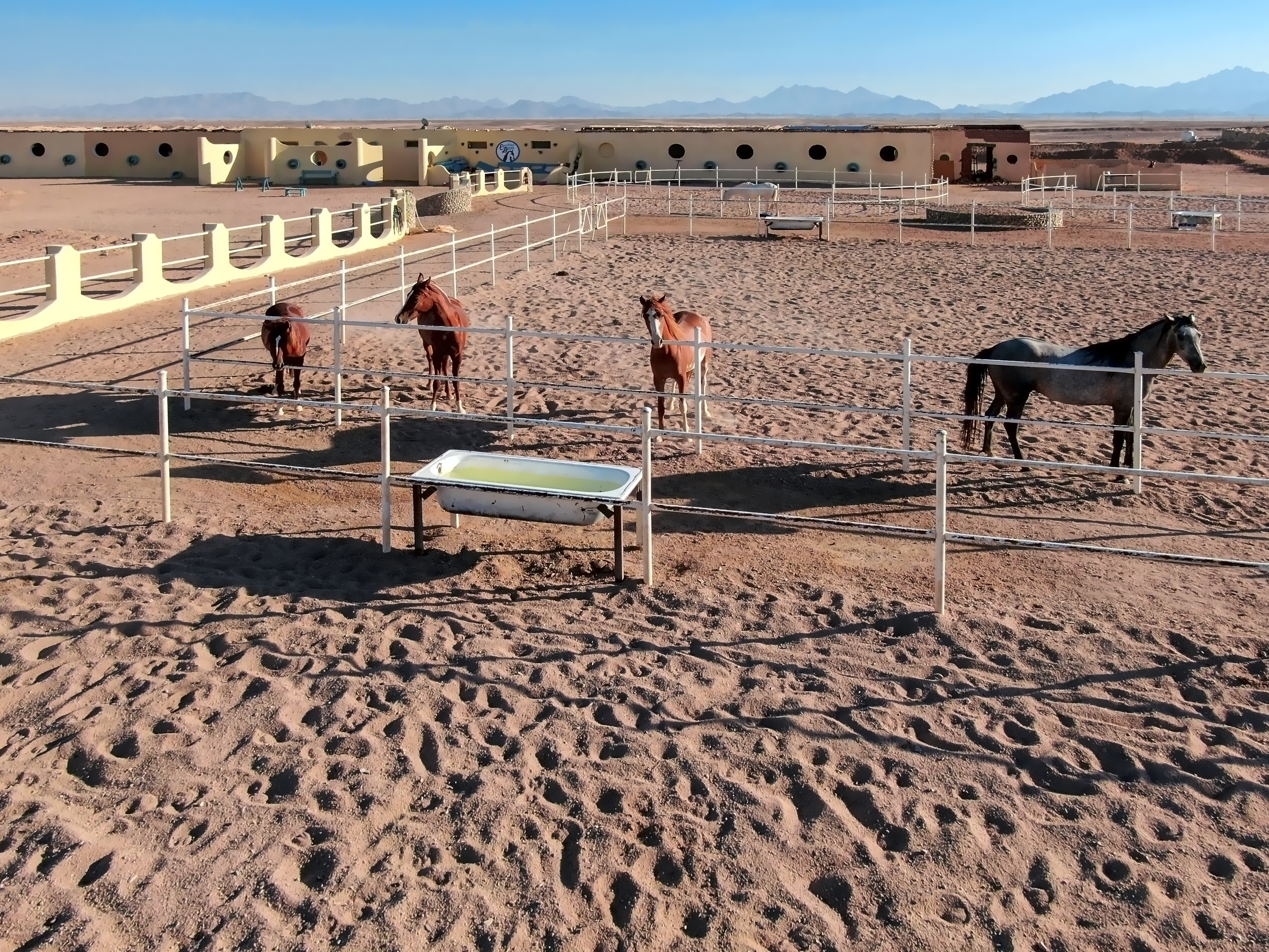
We first moved to Sharm El Sheikh, where I unexpectedly reconnected with the horse world. What began almost by chance slowly grew into a small project called Sharm Horses, focused on desert riding and horse care. In 2019, we moved our entire operation to Hurghada. It was no small feat, we relocated with nineteen horses, one donkey, nine dogs, and six cats, essentially moving our entire animal family across the country. That moment marked the beginning of what would later become Equestrian Dream Egypt.
Was there a defining moment when you realised you wanted to dedicate your life to horses in this way?
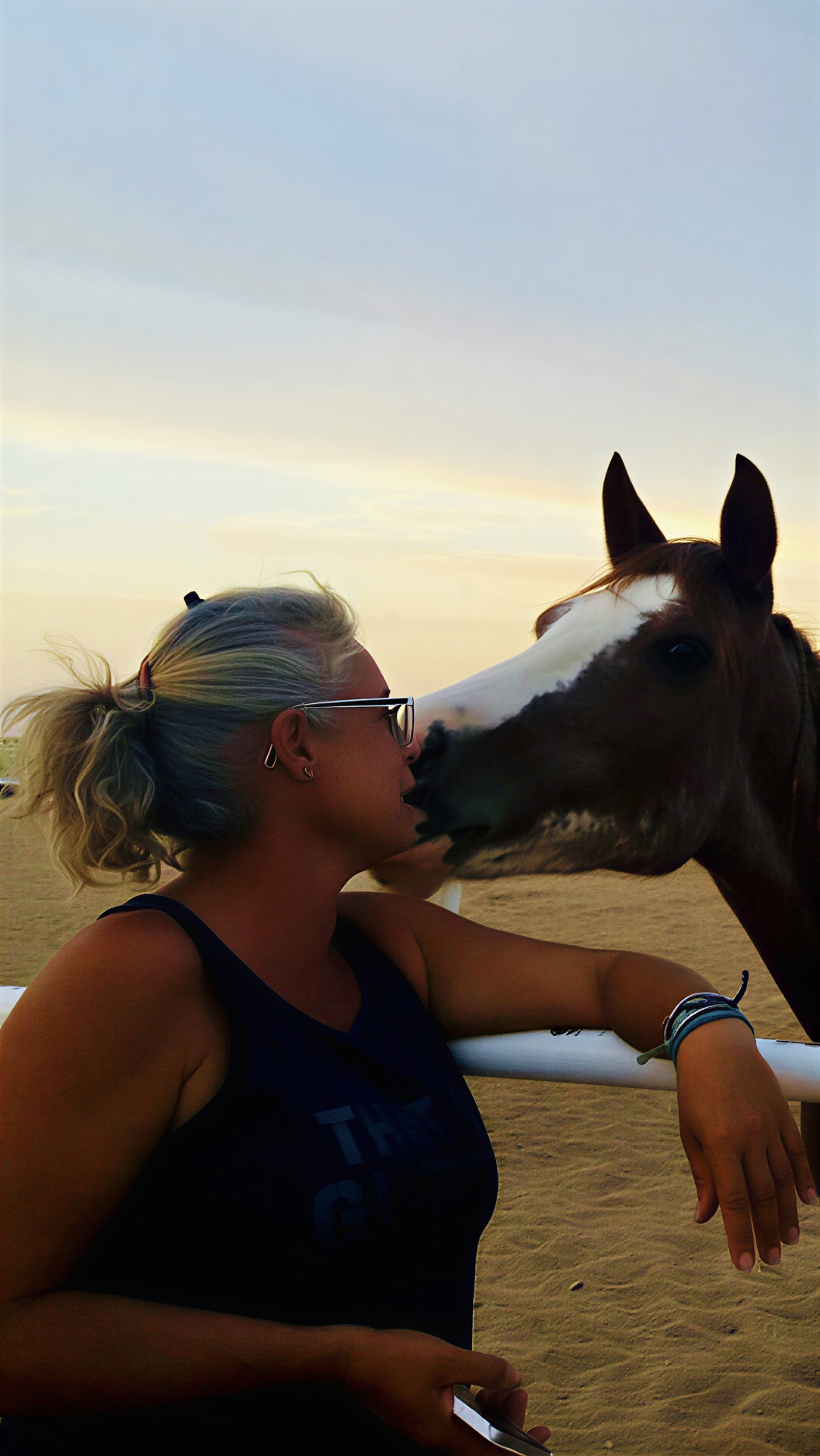
It was not a single dramatic moment, but rather a gradual realisation. Many of the horses that arrived at our project had difficult pasts, coming from places such as the Giza pyramids or poorly managed riding stables in Sharm El Sheikh and Dahab. Watching these horses regain their health, strength, and trust in humans has been one of the most meaningful aspects of my work.
What were the biggest challenges you faced in the early stages of building your project?
Starting an equestrian project in a foreign country always comes with challenges, but one of the most significant for me was cultural. In many parts of the Arab world, working physically with horses is traditionally considered a male-dominated field. As an Italian woman leading such a project, I had to earn credibility step by step. In the end, horses do not recognise nationality, culture, or gender; they respond only to clarity, trust, and consistency.
2. THE BIRTH OF EQUESTRIAN DREAM EGYPT:
How did Equestrian Dream Egypt evolve from an idea into a structured destination?
Equestrian Dream Egypt evolved gradually through experience. What began as a small desert riding initiative under the name Sharm Horses grew into a more structured project after our move to Hurghada.
Rather than building a traditional riding centre, my vision was to create a place where riders could experience horses, nature, and the desert environment in a deeper way. At Equestrian Dream Egypt, the horse is not simply part of the activity - the horse is the centre of the experience. Many of our horses come from rescue backgrounds, which means riders interact with animals that have their own histories and personalities.
It is a place where horses, humans, and nature interact meaningfully, and it has gradually become a safe haven for several Baladi dogs and Egyptian cats. After rehabilitation, we work to find responsible families for them in Europe.
3. RESCUED HORSES & WELFARE PHILOSOPHY:
How do you rehabilitate them?
Rehabilitation requires patience. Each horse progresses at its own pace. We focus on nutrition, gradual conditioning, and calm, consistent handling. When needed, I also seek professional support. I have worked with Italian horsemanship professional Giuseppe Cafaro, whose guidance helped refine our approach, and the physiotherapist Laura Santelli.
How do you match riders with rescued horses?
Matching horse and rider is one of the most important aspects of my work. Knowing my horses deeply and asking the right questions to riders allows me to create pairings that result in harmony and safety.
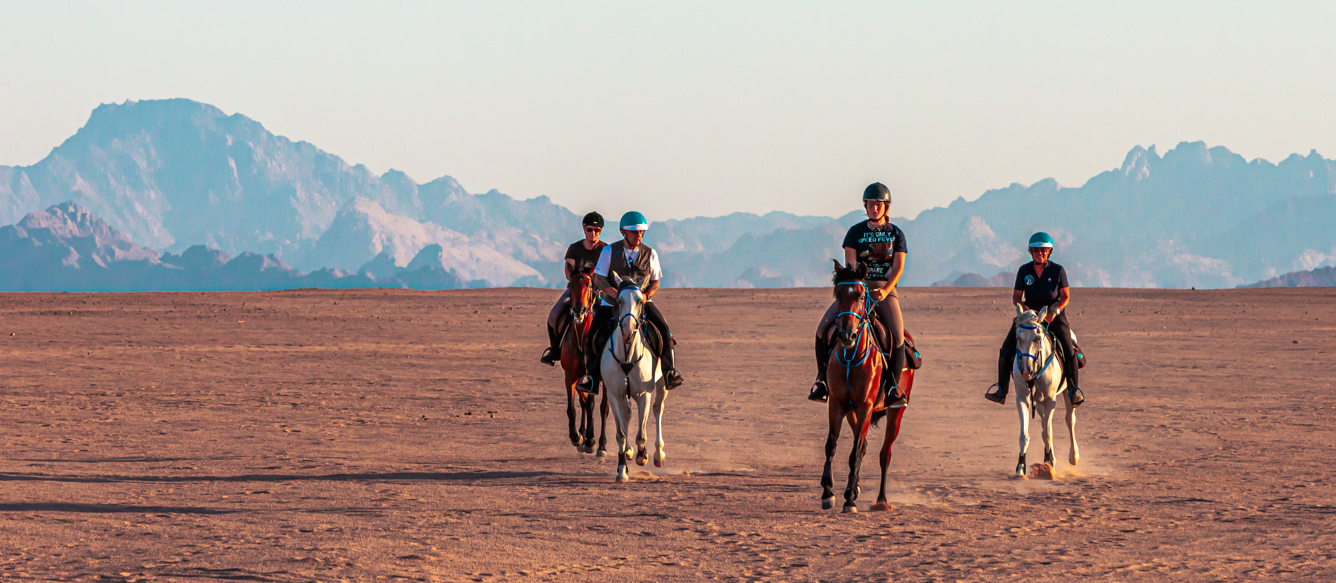
The desert offers vast open spaces, silence, and a rare sense of freedom. Riders move through wide landscapes where the horizon seems endless, creating a unique connection between horse, rider, and environment.
Can you describe a memorable ride?
The most memorable rides are often the moments when we explore a new route together with riders. Those rides create a sense of discovery and authenticity that stays with people long after they leave.
4. SUSTAINABILITY & ETHICAL TOURISM:
How do you respect the local ecosystem?
The desert is a fragile ecosystem. We try to keep our presence light and move through the environment with respect. We maintain positive relationships with members of the Maaza tribe, particularly Sheikh Merayi Abu Musallem, with whom we collaborate during long-distance rides. We also maintain connections with former inhabitants of Umm el Howeitat, now known as Ghost City.
What is your position regarding the horses at the Giza pyramids?
The situation is complex. Many people depend on tourism for their livelihood, but animal welfare clearly requires improvement. Real change will come through education, cooperation, and more responsible choices from visitors.
5. LEADERSHIP & ENTREPRENEURSHIP:
What challenges did you face as a woman building this project?
Working with horses in the Arab world is traditionally a male-dominated field. Respect had to be earned through consistency, competence, and determination. Patience and humility are essential. Understanding the culture and building relationships is just as important as understanding horses.
6. VISION FOR THE FUTURE:
Where do you see Equestrian Dream Egypt in the future?
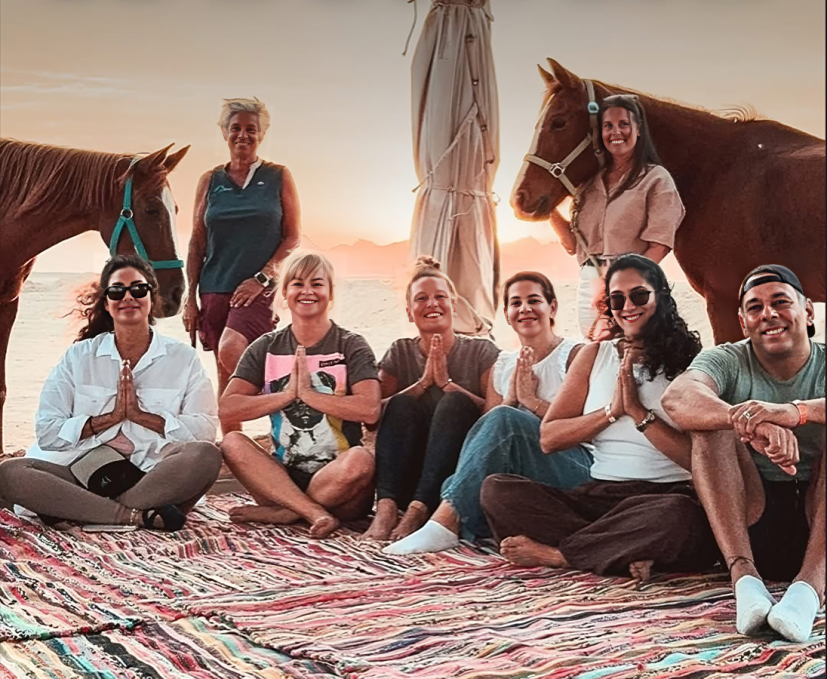
I see the project evolving toward a more refined and intimate model focused on small groups and meaningful experiences. We are gradually developing horse-assisted retreats where interaction with horses helps people reconnect with nature and themselves.
If the project can continue to give rescued horses a better life while helping people rediscover a deeper connection with them, then I believe it will have fulfilled its purpose.
“Horses do not recognise nationality, culture, or gender—they respond only to clarity, trust, and consistency.” HT
See website here
Photo Gallery
Prev 1 of 4 Next