

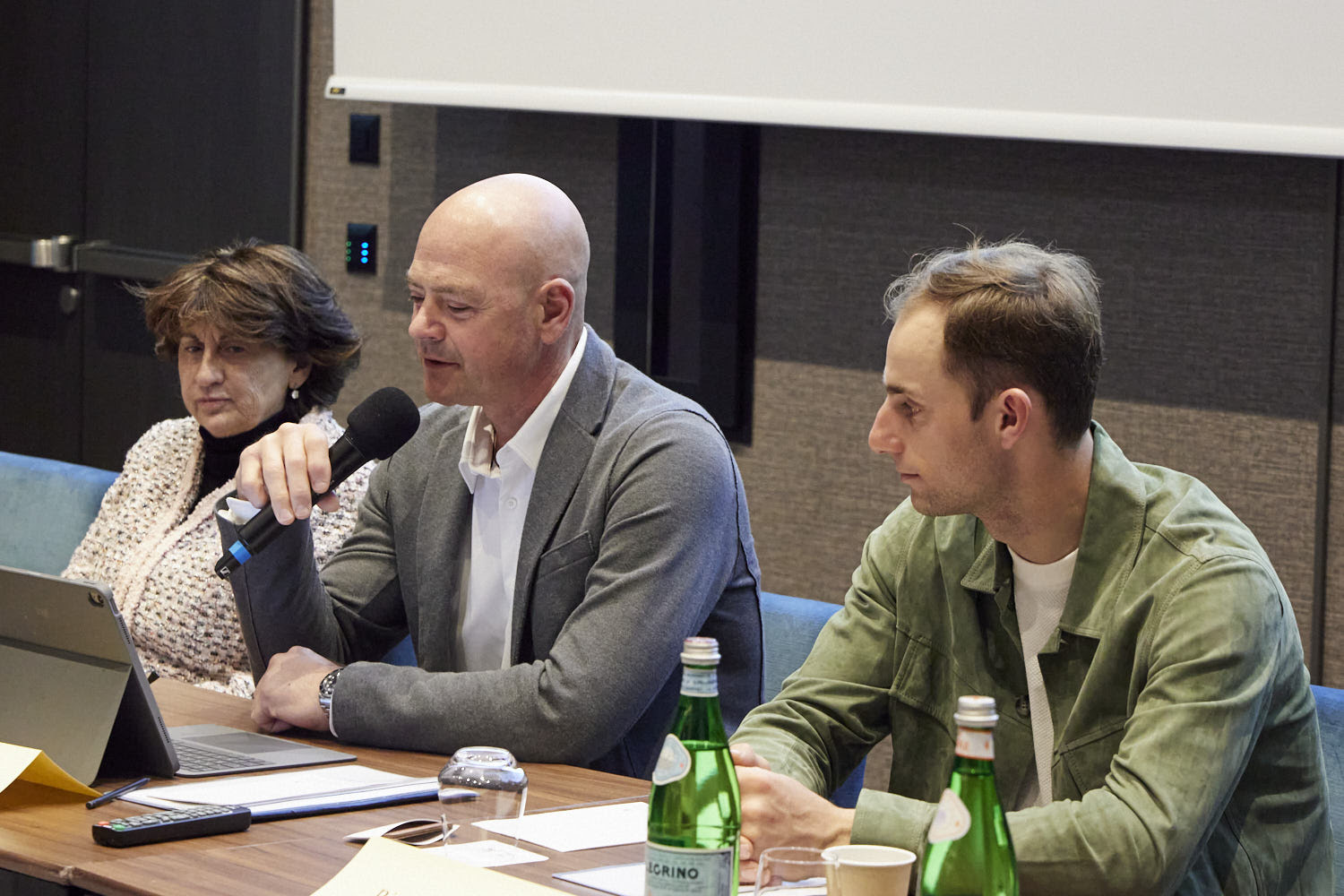
FEI JUMPING RULE 259 UNDER THE SPOTLIGHT AT IJRC GENERAL ASSEMBLY IN GENEVA


On 12 December, the International Jumping Riders Club (IJRC) held its General Assembly, coinciding with the biennial election of the Club’s senior leadership. The Assembly saw the official renewal of the current mandate, ensuring continuity in the Club’s mission to represent professional riders globally.
Leadership and Board Appointments:
Eleonora Ottaviani, Chair of the Assembly and long-standing IJRC Director, formally announced that François Mathy Jr. will continue as President for the next two years.
The re-elected Board includes:
Ludger Beerbaum, Emilio Bicocchi, Michael Duffy, Steve Guerdat, Rodrigo Pessoa, Kevin Staut, and Richard Vogel.
A dedicated representative for the USA will be elected directly by American members. Currently, Kent Farrington, Tiffany Foster, and Lauren Hough serve in this capacity.
In his acceptance speech, Mathy Jr. urged broader member participation: “I hope that riders, including those not on the Board, feel encouraged to contribute through our working panels. These are the core of our mission to strengthen the sport.”
The Debate Over FEI Jumping Rule Article 259 (The “Blood Rule”):
The central focus of the Assembly was the recent controversy surrounding Art. 259. The IJRC expressed frustration that several National Federations (NFs) failed to review the proposed changes presented as early as February 2025, until the FEI General Assembly in Hong Kong last month.
President Mathy Jr. noted that social media backlash was largely fuelled by a lack of comprehensive reading of the rules. He clarified several key points regarding the 2026 updates:
- Strict penalties: under Art. 264.4.1, spur marks remain a mandate for immediate elimination.
- Veterinary oversight: all instances of blood will now be examined by an official FEI veterinarian. The final decision on whether a horse can continue rests with the Ground Jury, removing the sole burden from Stewards.
- Meaningful Sanctions: two "Jumping Recorded Warnings" within 12 months now trigger a one-month suspension and a CHF 1,000 fine (€1,070), which the IJRC argues is a more effective deterrent than simple elimination from a single class.
Eleonora Ottaviani emphasised that the IJRC’s priority is proportionality, ensuring that "micro-lesions" that do not affect horse welfare - and are often accidental - do not result in career-damaging penalties, while still maintaining the highest welfare standards.
Addressing "Fantasy" Fees and Rising Costs:
The IJRC addressed the ongoing issue of excessive utility and service fees charged by Organising Committees (OCs).
New tariff implementation: a maximum fee structure has been agreed upon, but will not take effect until April 2026.
- Cost Sharing: Ottaviani criticised "fantasy" costs for items like electricity, noting that while riders can contribute to costs, they should not bear the full financial burden of the venue’s overhead.
- Protecting young riders: the Board highlighted the struggle for 2* and 3* riders, where entry fees of € 6,000 – € 8,000 per month often outweigh potential prize money.
The Assembly also discussed the decline of national circuits. Jessica Kürten, Chair of the FEI Athletes Committee and Irene Verheul of Jumping Amsterdam noted that while the "prestige" of international CSI 2*/3* shows is currently more attractive to riders, revitalising national shows is essential for talent development and financial sustainability.
Updates to Longines Ranking Points:
A new sliding scale for Nations Cup ranking points will be introduced in 2026 to ensure fairer distribution. Points will be calculated based on the number of single clear rounds at an event:
- HH (5*) Events: a multiplying factor (e.g., 1.2) will be applied if clear rounds reach 25%.
- H Events: a separate scale will apply to all other international events to ensure predictability in rankings.
- Appendix: Key Regulatory References (Effective Jan 1, 2026)
- Art 259.1: Blood caused by tack/equipment results in a Jumping Recorded Warning. Two warnings in 12 months lead to a 30-day suspension and CHF 1,000 fine.
- Art 259.2: Minor incidents (e.g., bitten tongue) may allow for cleaning and continued competition if the horse is deemed fit.
- Art 259.3: The Ground Jury and Vet Delegate must jointly confirm a horse is fit to compete after any blood incident.
- Art 264.1: Marks indicating excessive use of spurs or whip mandate immediate disqualification.
--ENDS--
Edited by HT