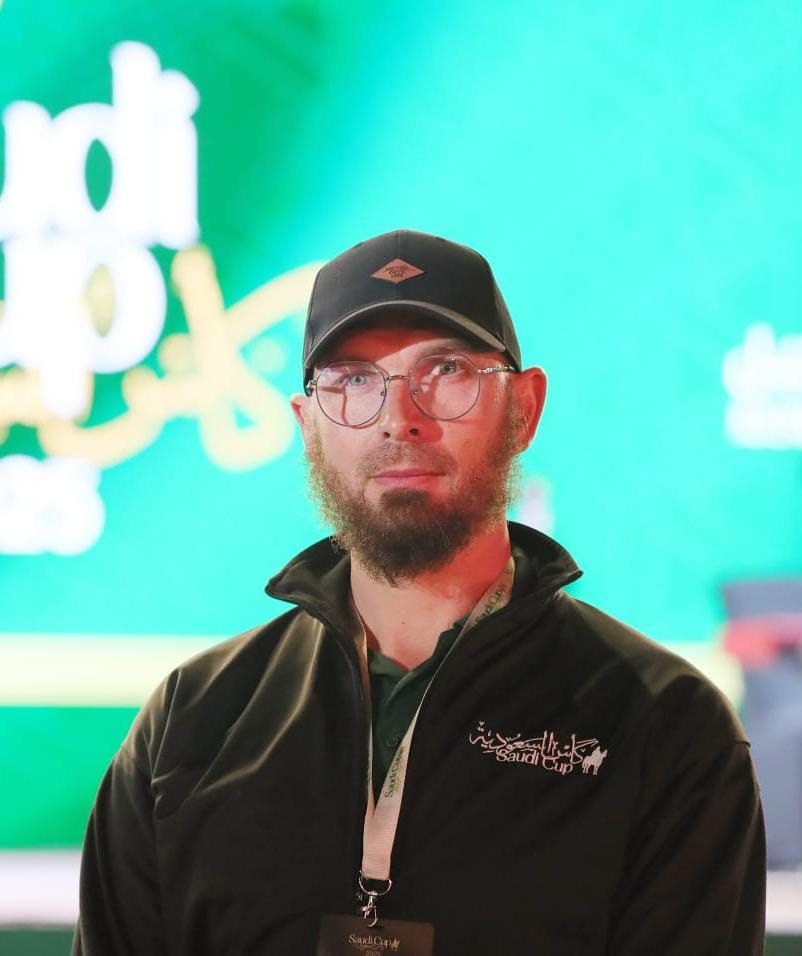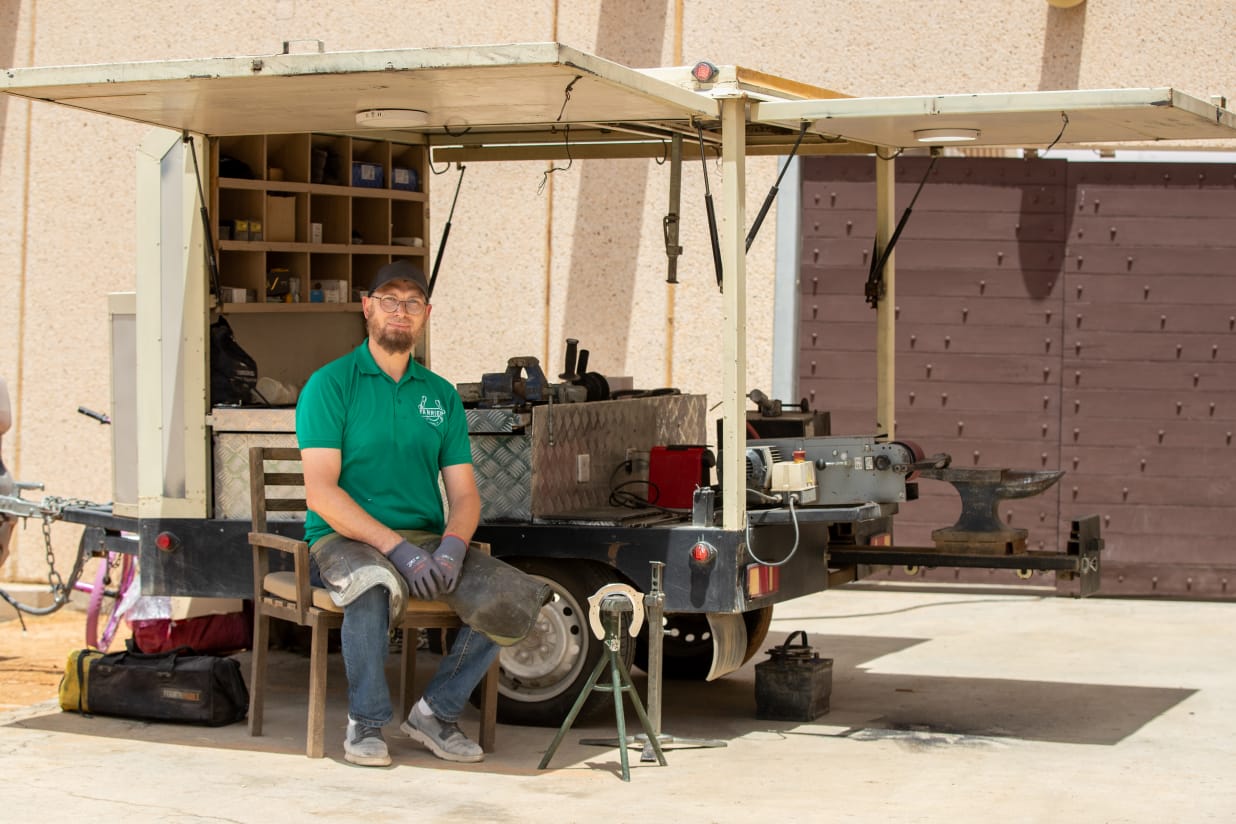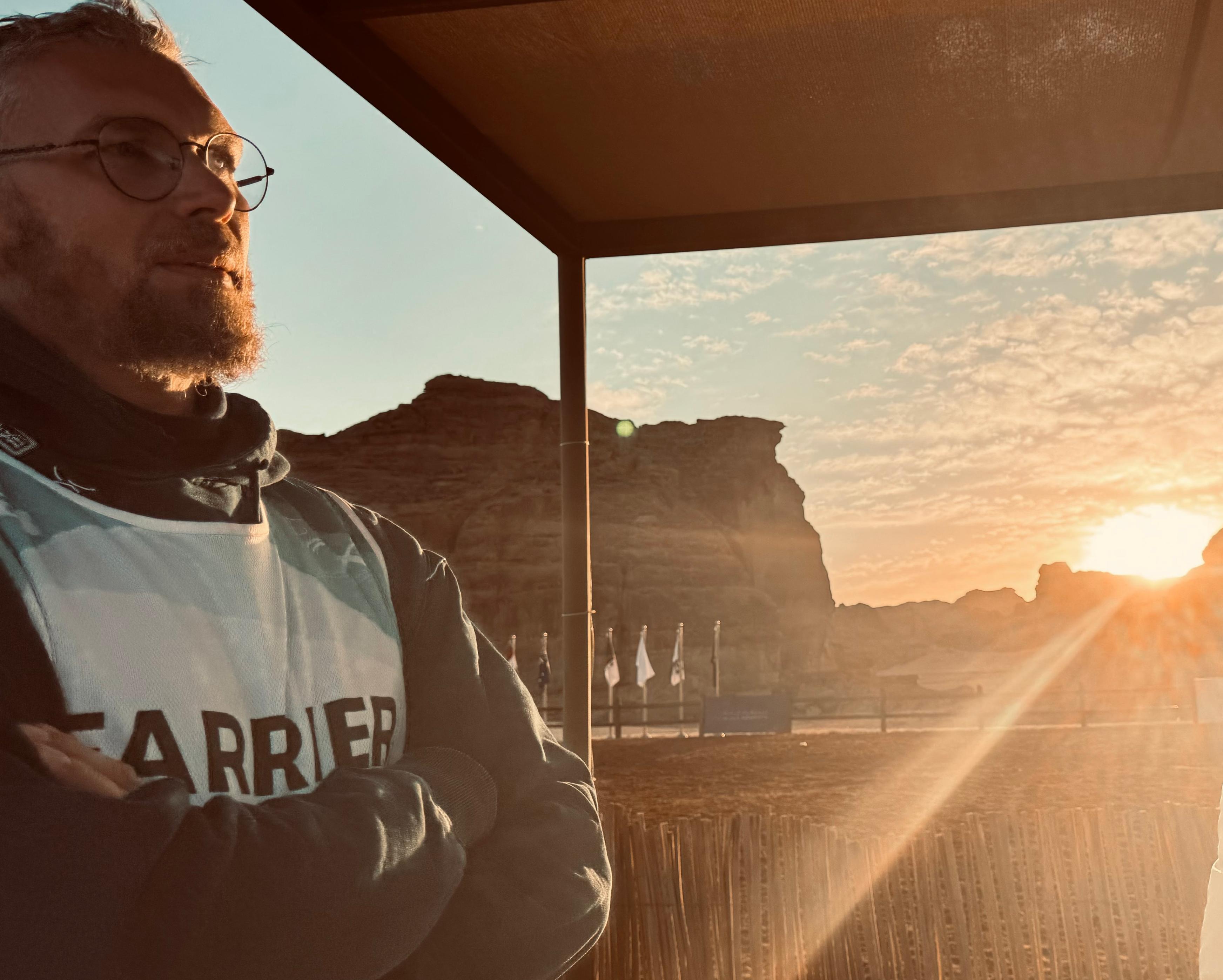
NO FOOT, NO HORSE: THOMAS FENZL’S PHILOSOPHY ON THE SOLE OF A CHAMPION


(No part of this article may be copied or reproduced in any form without the permission of HT)
IN THE WORLD OF HIGH-PERFORMANCE EQUESTRIAN SPORT, BALANCE IS EVERYTHING. HORSE TIMES RECENTLY CAUGHT UP WITH THOMAS FENZL, A VETERAN FRENCH FARRIER WHOSE 25-YEAR CAREER HAS TAKEN HIM FROM THE RACING STABLES OF EUROPE TO THE HEART OF SAUDI ARABIA. HAVING CARED FOR THE FEET OF CHAMPIONS LIKE ROMANTIC WARRIOR, THOMAS JOINS US TO DISCUSS THE EVOLVING SCIENCE OF SHOEING. PREPARE TO SEE THE ART OF FARRIERY IN A WHOLE NEW LIGHT.
1. Thomas, if you had to explain your job to a 10-year-old, how would you do it?
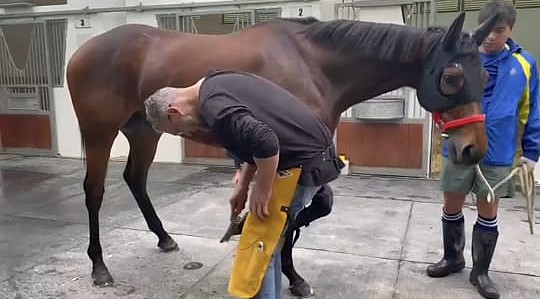
Imagine that either your nails get really long or your shoes are full of mud; it feels uncomfortable, doesn’t it? Horses feel the same with their feet, which we call hooves. My job is to clean, trim, and make their feet nice again. That’s what makes me really happy to do what I do.
2. If you were a showjumping horse, would you prefer to have horseshoes or not, and why?
Horseshoes for competitions, barefoot for the holidays. Even horses need time off!
3. Can you take us back to the beginning of your journey, what first drew you to the craft of farriery, and what made you dedicate your life to it?
Some passions start very young. My connection with horses began in riding centres of the Paris suburb around Fontainebleau. In 1998, at the age of sixteen, I entered farriery training in France, a profession built on demanding apprenticeship and field discipline.
I had the privilege of learning under Étienne Crahay, an innovative instructor who had patented what was then a revolutionary glued shoeing system. Very early, he showed me that this trade was not only manual, but also deeply technical and constantly evolving. My practical apprenticeship then took me to Deauville in Normandy, one of the great horse regions of France, where horses shape every part of daily life. That immersion gave me solid foundations, and from there farriery stopped being a training path and became my life.
4. With over more than 25 years in the profession, how have you seen the role of the farrier evolve within high-performance equestrian sport?
The hoof is the same as it was thirty years ago - what has changed is the level of expectation around it. When I started, farriery was still seen mainly as a traditional manual occupation. Today, it has become far more visible, far more specialised, and much more connected to the constant rise of high-performance equestrian sport.
Riders and owners have always carried this sport with high expectations; the increasing demands of top-level competitions pushed farriery to develop more sophisticated solutions year after year. I entered this profession at a moment when shoeing was beginning to move beyond simple protection and becoming an increasingly strategic part of the horse’s preparation.
5. You have worked in some of the most prestigious equestrian environments, from Chantilly to Oman, the Saudi Equestrian Federation, and the Jockey Club of Saudi Arabia. How has each of these experiences shaped you professionally?
Every serious environment leaves you with a different lesson.
Chantilly was my school of rigour. Surrounded by elite trainers, international owners, and the permanent rhythm of racing, I learned very quickly that in such environments, details are never secondary.
Oman provided me with something different: perspective. Through an educational exchange supported by FEI Solidarity, I was reminded that this profession grows not only through practice, but also through the sharing of knowledge.
Saudi Arabia then brought me the institutional scale. Working with the Saudi Equestrian Authority, the Saudi Arabian Equestrian Federation, and the Jockey Club of Saudi Arabia exposed me to a rapidly developing equestrian structure with very high standar
Altogether, these experiences taught me one clear lesson: in this profession, precision alone is not enough. Adaptability is equally essential.
6. Working across different countries also means working with different climates, surfaces, horse types, and competitive demands. How much does that influence your approach to shoeing?
Good hoof care always starts with understanding the environment. A hoof cannot be managed the same way everywhere. Whether a horse lives in a temperate country like France or in a desert climate like the Gulf, daily attention remains essential. Each environment creates different weaknesses and each horse reacts in its own way.
Some feet retain too much moisture, others dry too quickly, some become brittle, others remain softer. That is why there is no universal care formula. The farrier must first understand what the horse is dealing with. Every country also develops its own practical habits. In humid regions of France, for example, we traditionally use hydrophobic hoof greases to protect the foot from excess moisture, while in drier climates the care strategy naturally changes.
Then of course, discipline changes the shoeing itself; racing, jumping, or endurance all require different mechanics. The principle remains identical: adaptation is part of good farriery.
7. At the highest level, how important is farriery in a horse’s soundness, longevity, and performance, and why is it sometimes still underestimated?
Everything starts from the hooves. “No foot, no horse” remains one of the truest sayings in our profession. A horse can compensate for many things, but the body never forgets mechanical imbalance. An unbalanced hoof creates strain all the way up the limb. The horse tries to relieve itself by changing its movement, shifting weight or compensating quietly, and very often that is where future injuries begin.
I have seen many horses continue to perform with unsuitable shoeing simply because they are generous animals. Over time the physical cost will eventually appear. That is why farriery is not only a technical intervention; it is also a long-term responsibility toward the horse. Propulsion, stability, direction, and confidence are deeply connected to the quality of the hoof. If this role is still underestimated, it is often because many people only see the shoe and not the invisible balance underneath it. In reality, soundness is built long before lameness appears.
8. You have been the officially credited farrier at landmark events such as the Saudi Cup, the Longines Global Champions Tour, FEI World Cup, and Saudi Games. What does it mean to be trusted at that level of competition?
At that level, it is above all a great responsibility. Of course, to be officially present at such events is an honour, because these are some of the most demanding stages in international equestrian sport.
Very quickly, the event itself becomes secondary to the responsibility that comes with it. Horses and teams are under pressure; every technical decision has an impact at one point or another. It reminds you that this profession leaves very little room for approximation. You are there to bring calm, precision, and reliability when the level around you is at its highest. More than a title, I see that trust as a duty to remain discreet, consistent, and fully dependable for the horse and for the people working around it.
9. What are the biggest technical and logistical challenges of working as a farrier during major international championships and elite events?
On major events, it is not enough to know shoeing. You must know how to read everything happening around it. Each discipline has its own rhythm, constraints, sensitive areas, and moments when an intervention is possible without disturbing the organisation.
Racing, jumping, endurance, and other top competitions therefore require not only different materials, but also a very precise understanding of the environment in which you are working. With experience, you learn where you need to be, who you need to coordinate with, and above all when you need to act in order to help the horse without slowing down the whole mechanism around it.
You need the right tools, the right equipment, and to remain available from the beginning to the very end. Above all, you must keep that discreet anticipation that allows all matters to be solved before they become visible. In elite championships, technical skill matters greatly. Reading the ground and understanding the right moment often make the real difference.
10. In your opinion, what separates a good farrier from a truly exceptional one, especially when working with top sport horses?
Before even trying to make a distinction, I believe it is important to remember the immense importance of the horse world and of all those who serve it. The horse brings to human beings far beyond competition. Both horses and humans have been sharing a common history for thousands of years. All the professions that live around the horse silently contribute to that continuity, and the farrier holds a central place in it. At the end of the day, everything rests on the horse’s foot. That is why I have a deep respect for all farriers, whatever their country, their field of work, or their level of intervention.
If one must define what makes some truly exceptional, I would say it is their ability to bring together all the qualities of the profession at the same time. It is not only about being skilful with either hands or words. One must know how to handle a difficult horse, find the right solution, accomplish the required task properly, satisfy the surrounding team, and above all bring each horse as close as possible to the most suitable shoeing - be it simple or sophisticated - so that it feels as free as possible and can fully express its natural abilities. When all these qualities come together consistently, one comes close to a truly exceptional farrier.
11. Every discipline requires different demands from the horse. How does your work differ when dealing with racehorses compared to showjumpers or other performance horses?
Whatever the discipline, the first constant must always be the horse’s comfort. Shoeing should remain a form of protection that stays as close as possible to the horse’s natural balance. The goal is never to force performance artificially, but to allow the horse to express its movement as freely as possible.
From there, adaptation begins. Racehorses generally require lighter shoes for speed and efficiency, while show jumpers often need a more supportive and profiled balance for stability on take-off and landing. Then other factors come in: age, pathology, workload, and the individual way each horse uses its body. An older horse or a horse beginning to show certain weaknesses will naturally need different adjustments. Materials also play an important role today. Weight, shape, and composition can bring real benefits when they are chosen wisely. Whether we are talking about elite athletes or ordinary riding horses, the principle never changes — comfort remains the true foundation of good shoeing.
12. In your day-to-day work, how closely do you collaborate with veterinarians, riders, trainers, and grooms - and how essential is that teamwork to the horse’s welfare and success?
Around a horse, each eye sees something different. The veterinarian sees the pathology through imaging, the owner knows the horse’s history, the groom notices the daily habits, the rider feels the movement, and the trainer sees the change in performance. My job is to listen to all, connect the information, and bring the most practical answer through the foot, whether in the application itself or in choosing the right type of shoe, the right material, and the right equipment available.
In many difficult cases, especially therapeutic ones, the shoeing plan is built in consultation with all parties. In Saudi Arabia, where equestrian sport brings together many nationalities, mastering several languages and keeping a multicultural mindset has become an important part of an efficient collaboration. The more information circulates, the better the horse is understood.
13. Have there been particular horses, moments, or career milestones that left a lasting mark on you and confirmed you were on the right path?
There are some moments in this job you simply never forget. One of mine was in Deauville, France, discovering the remarkable horse world of the late Alec Head, where breeding, training, and reproduction were running on a scale I had never seen before. It was also there that I saw Octagonal arriving from Australia for the breeding season, a horse so famous he even had his own statue back home. For the young farrier I was, it was the moment I realised how vast this world was - and how much ambition it could awaken.
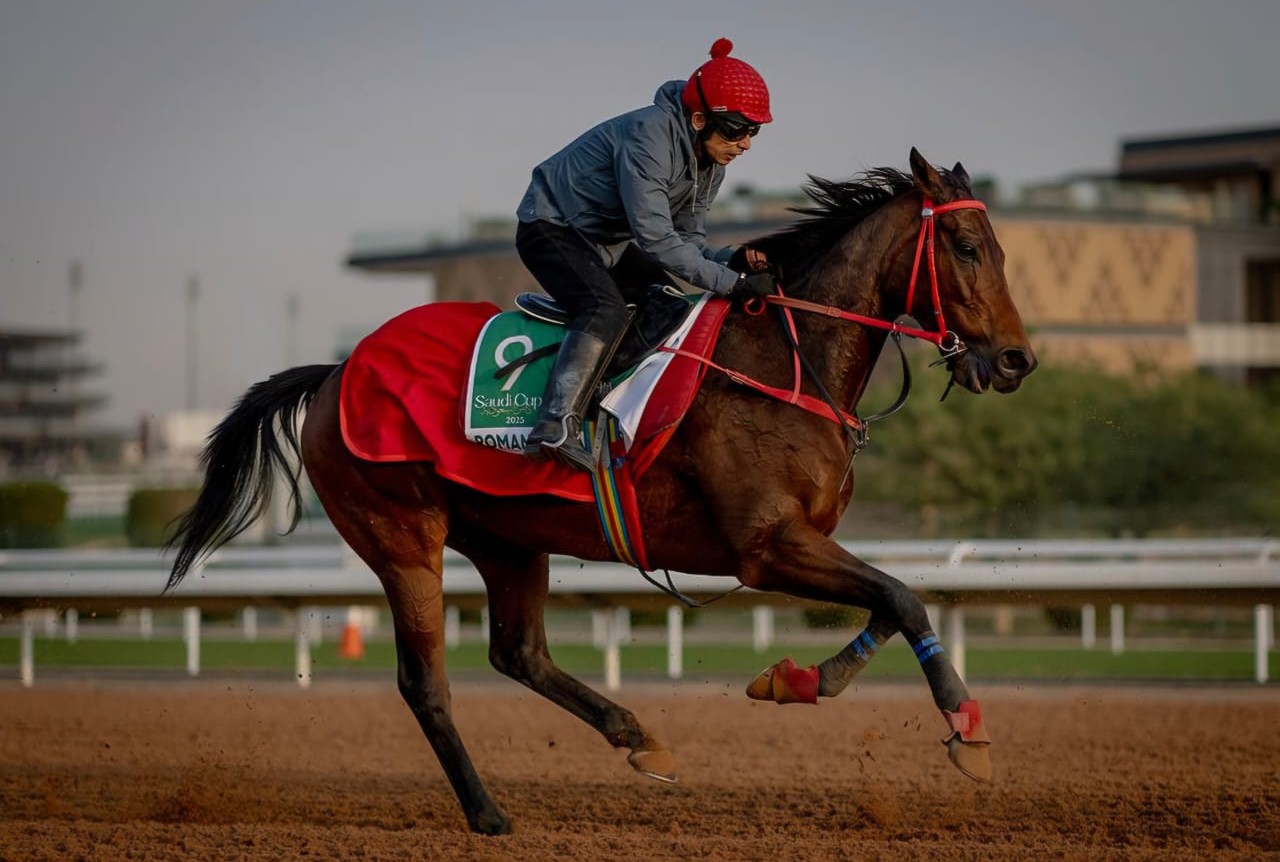
Later came the major French racing stables, then Saudi Arabia and its international dimension. And of course, shoeing Romantic Warrior (the world’s highest-earning racehorse) during his visit for the Saudi Cup in 2025 remains one of those symbolic milestones. In this profession, some horses quietly remind you how far your work has taken you.
14. Saudi Arabia’s equestrian scene has grown tremendously in recent years. From your perspective, how has the Kingdom evolved in terms of professionalism, infrastructure, and standards of horse care?
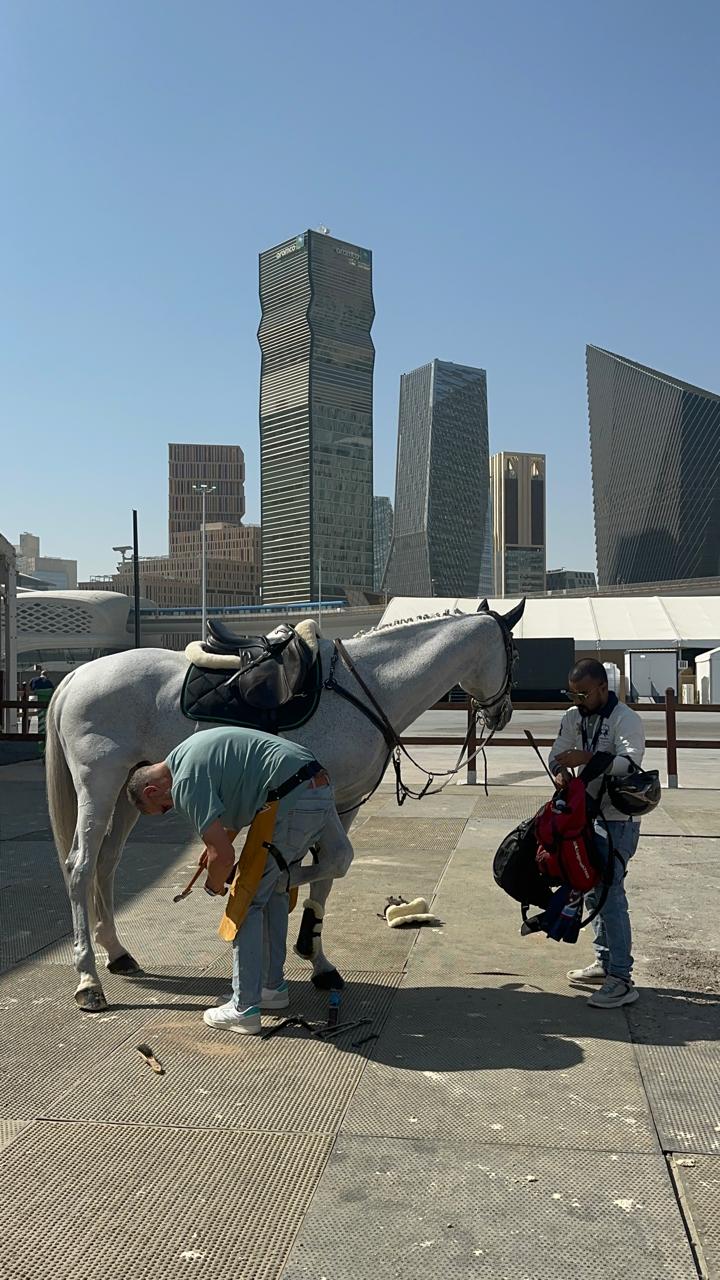
In fifteen years in Saudi Arabia, I have seen the horse industry grow with remarkable speed. One advantage of my profession is that it takes me inside many different stables, disciplines, and working environments, which gives me a broad view of how the level has changed over time.
The evolution is visible not only in the horses and the competitions, but also in the infrastructures themselves. I have seen stables become more functional, better designed, more technical, and more integrated with everything a horse needs on a daily basis. Inside those stables, collective organisation, technical planning, and attention to details have also become increasingly stronger.
From the highest level of leadership down to the daily people working on the ground, the will to make this sport evolve can clearly be felt. I have seen this particularly in endurance. Saudi teams have worked consistently on horse management, hoof care, conditioning, and long-term preparation, and the level has risen impressively. Nebras Muscat, ridden by Saudi rider Muhannad Alsalmi, winning the Al Fursan Cup two years in a row against top international competition, is a strong proof of that evolution. Having followed part of this progress myself through hoof care and technical exchanges, I can say that Saudi Arabia is growing together with the horse industry and contributing positively to its international development. It is the kind of place where practical experience can still make a difference.
15. What are some of the most common misconceptions riders or owners still have when it comes to hoof care and shoeing?
One of the biggest mistakes is to think about the hoof only when a visible problem appears. In reality, many problems begin much earlier. I still see people buying horses without paying enough attention to the quality of the feet and limbs, then later facing issues that no shoeing can fully solve, especially in sport horses. A farrier’s eye before purchase is often essential.
I also see technical solutions used too automatically. Heel elevation, for example, has a purpose in specific cases, but without a full understanding of the horse’s balance it can easily be misused. And finally, many owners wait too long between appointments, forgetting that a horse can still move and perform while the hoof balance is already deteriorating. The real key is not to treat hoof problems too late, but to know how to recognise them early.
16. Technology and materials in farriery continue to progress. How do you balance traditional craftsmanship with modern innovation?
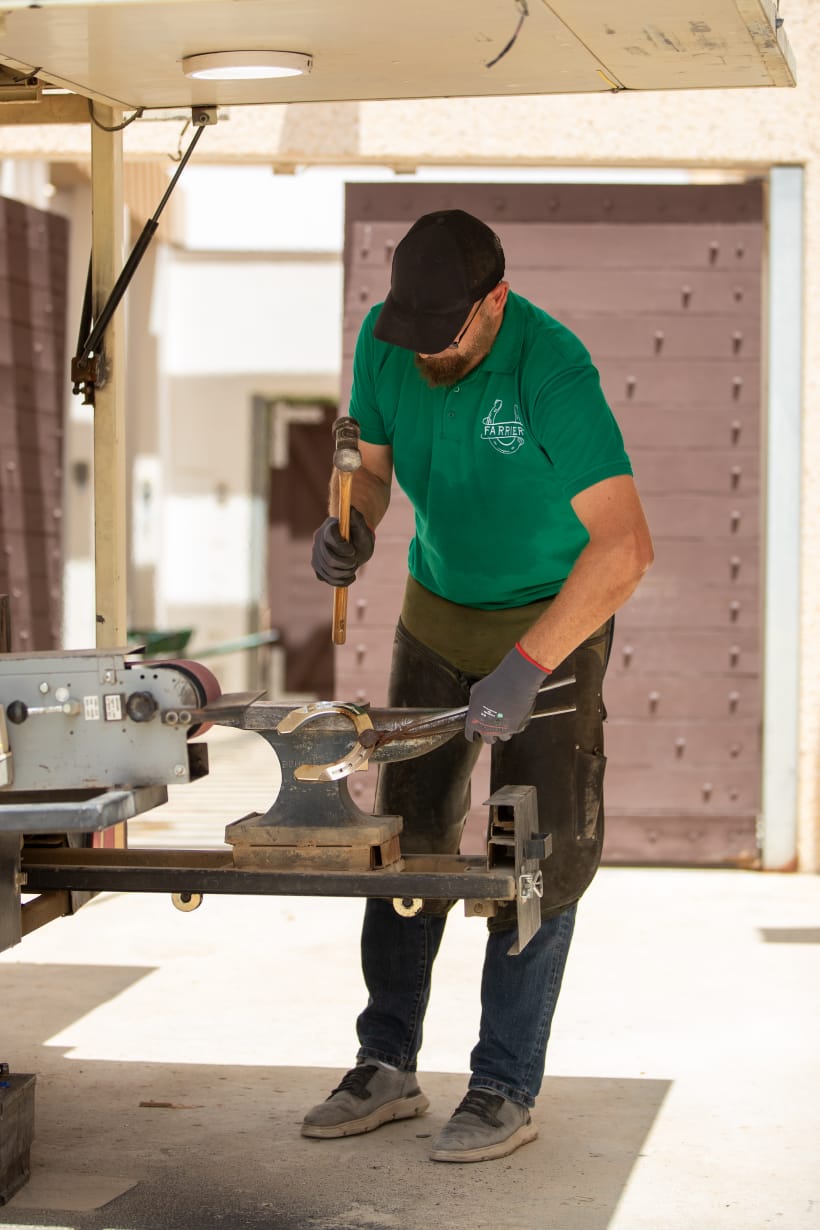
Today, a farrier no longer works with hammer and anvil alone. Modern technology has changed the profession long before we even touch the hoof. Video analysis, imaging, and advanced diagnostic tools now allow us to detect imbalances and document pathologies with a level of precision that was difficult to achieve years ago. The real progress lies in the association between human expertise and technology.
I have seen many cases where the veterinarian’s or farrier’s first diagnosis was later confirmed by the machine. Technology gives us more security, more accuracy, and better follow-up, but professional judgement remains essential. It also makes daily work more efficient. Many administrative and monitoring tasks are now easier, which allows us to dedicate more time to the horse itself and to the quality of care. Today we also have custom-made shoes, lighter alloys, therapeutic supports, and many compensated models that allow us to guide movement and relieve pressure with far greater effect than before. Yet despite all these advances, one principle remains the same: the best horse is always the one that can stay as close as possible to its natural movement.
17. For young farriers aspiring to work at the very highest level, what advice would you give them about building both skill and reputation in this demanding profession?
Farriery is not just a job. It is a heritage. In France, this craft survives because one generation gives it to the next. Men spend their lives practicing it, then teaching it, and that is what gives this profession its nobility. Yet even after school, many leave the profession, and many others stop later in life for different reasons. Very few remain in it for an entire lifetime, which shows how special this trade truly is.
To enter this “métier” is to accept real commitment. It needs strength, patience, discipline, and a true respect for horses. Passion is important, but passion alone is not enough. My advice to a young farrier is simple: work hard, stay humble, keep learning, and this profession can take you further than you imagine. Saudi Arabia now has a real opportunity to build a proud new generation of local farriers with strong foundations and international vision.
18. After such a rich international career, what continues to motivate and inspire you every day when you step into the forge or beside a horse?
What would excite me most for the future is to see this profession one day carried by a real generation of Saudi farriers. Saudi Arabia already has an enormous horse population, far beyond competition alone. Across many regions of the Kingdom, horses remain part of private farms, breeding projects, riding education, and daily equestrian life. The next major step, in my opinion, is to see the technical professions around the horse grow with the same national strength. Farriery should be one of them.
I would love to see a true high-level institution created here - not a symbolic project, but a serious centre of excellence capable of training young Saudis on strong and lasting foundations. For that to succeed, quality would be everything. This trade cannot be built on shortcuts or improvised teaching. It needs experienced people, solid foundations, and the right bridge between cultures, languages, and working mentalities.
After fifteen years working inside Saudi equestrian life, I have seen how important that human connection can be. If such investment is made with real vision, Saudi Arabia could not only continue growing its horse culture, but also build the technical generations that will sustain it for decades. Horses have always carried civilisations forward; the people trained around them will decide how far that future can go. HT
Photo Gallery
Prev 1 of 6 Next