FALEH AL AJAMI: THE MAN WHO OUTPACED HIS IDOL


(No part of this article may be copied or reproduced in any form without the permission of HT)
WHAT DO YOU GET WHEN YOU MIX THE GRIT OF AN ENDURANCE RIDER, THE SPEED OF A FLAT-RACER, AND THE PRECISION OF A WORLD-CLASS SHOWJUMPER? YOU GET FALEH AL AJAMI.
AL AJAMI IS A HORSEMAN WHO LISTENS MORE THAN HE SPEAKS, OFTEN FOUND IN THE QUIET OF THE STABLES RATHER THAN AMONG FRIENDS. HIS JOURNEY CURRENTLY SPANS CONTINENTS - FROM THE MANICURED ARENAS OF THE HAMPTON CLASSIC, WHERE HE RECENTLY FOUND HIMSELF APOLOGISING TO HIS CHILDHOOD IDOL, BEAT MÄNDLI, FOR BESTING HIS TIME, TO THE EQUESTRIAN PARADISE OF AL SHAQAB IN DOHA.
FRESH OFF A STINT IN THE UNITED STATES AND NOW SETTING HIS SIGHTS ON THE WORLD EQUESTRIAN CHAMPIONSHIPS IN AACHEN, AL AJAMI SPOKE WITH HORSE TIMES TO DISCUSS THE ART OF THE 90TH-MINUTE GOAL, THE MENTAL GYMNASTICS OF RIDING TWO DIFFERENT HORSES IN A SINGLE JUMP-OFF, AND WHY THE SECRET TO SUCCESS IS SIMPLY MAKING SURE YOUR HORSE IS THE HAPPIEST ONE IN THE STABLE.
Tell us about your activity for the past three months: where you’ve been competing, your base, and your current trainers?
I spent the last three months in the United States training with Darragh Kenny. It was a fantastic and entirely new experience for me, and one I truly enjoyed. I am already planning to return to the States this year.
1. Tell us a bit about your partnership with Wathnan Jumping?
I am incredibly grateful for my partnership with Wathnan; it feels like something truly special. My hope is to reach my highest goals alongside them. I am currently focused on the next steps of our journey; I will fly to Europe with my horses and I hope to qualify for the FEI Jumping World Cup Final and the from here.
2. What are your plans after the completion of all the shows in Doha, ending with the LGCT in March?
My primary focus will be the European tour as I prepare for the World Equestrian Championships in Aachen.
3. You’ve mentioned it takes about six to eight months to truly form a bond with a new horse. What is the very first thing you do with a horse like Karmalensky or Zodiak during that first week to start building trust?
In the first week, I try to understand their preferences during flatwork and integrate them into my way of working. My priority is always to keep them happy and healthy. There is no secret ingredient - I simply spend as much time as possible with them in the beginning. During that first week, I try to feel them and listen to what they are telling me, rather than expecting them to listen to me.
4. You started in endurance before moving to jumping. Does that "long-distance" mindset ever creep in during a jump-off, or do you have to completely switch off the endurance rider inside you to find that short, sharp speed?
Actually, I was competing in both endurance and jumping simultaneously for a time. I started my jumping career in 2001. I even did flat racing for one season just to experience it. I believe that having that background helps; when you are accustomed to high speeds, it becomes much easier to go fast in a jump-off because you are comfortable with the pace.
5. You have spent a significant amount of time training in Holland over the years. What is it about the equestrian environment there that makes it such a vital destination for a professional rider?
I spent a significant amount of time there because it is truly one of the best countries for our sport. Everything is close by, the facilities are world-class, and there are so many high-quality shows. It is effectively the global hub for show jumping.
6. You’ve said you spend more time with your horses than with your friends. When you walk into the stable to start your workday, how can you tell just by looking at a horse’s face what kind of mood they are in?
It is very true. After spending that much time together, you develop an intuition. You can read their expressions and their energy immediately; they tell you exactly how they are feeling that morning before you even put a saddle on.
7. In the arena, you only get about two minutes to show months of hard work. What is the last thought that goes through your head right as the bell rings and you approach the first fence?
Whenever I enter the ring, I tell myself: "show them what you can do." I always talk to myself to stay motivated. I say, "show them who you are and what you are capable of." I try to "charge" myself up so that I can give my absolute best performance.
8. In the Longines Hathab tour, you’ve sometimes ridden two different horses in the same jump-off. How do you mentally "reset" your brain to ride a mare like Ambre De Beaufour differently than a gelding like Larko Denfer just minutes apart?
When I walk the course, I categorise the technical requirements for each horse. For example, with Ambre, I know she has a smaller stride, so I walk the lines specifically for a smaller horse. The moment I finish my round with her, I immediately switch my mindset for Larco. Because he has a massive stride, I have to remind myself that the distances will come up very "short." You have to be very disciplined to switch your focus that quickly.
9. You grew up watching Beat Mändli, and recently you stood above him on the podium at the Hampton Classic. What was the most surreal part of sharing a prize-giving ceremony with someone you used to watch on video?
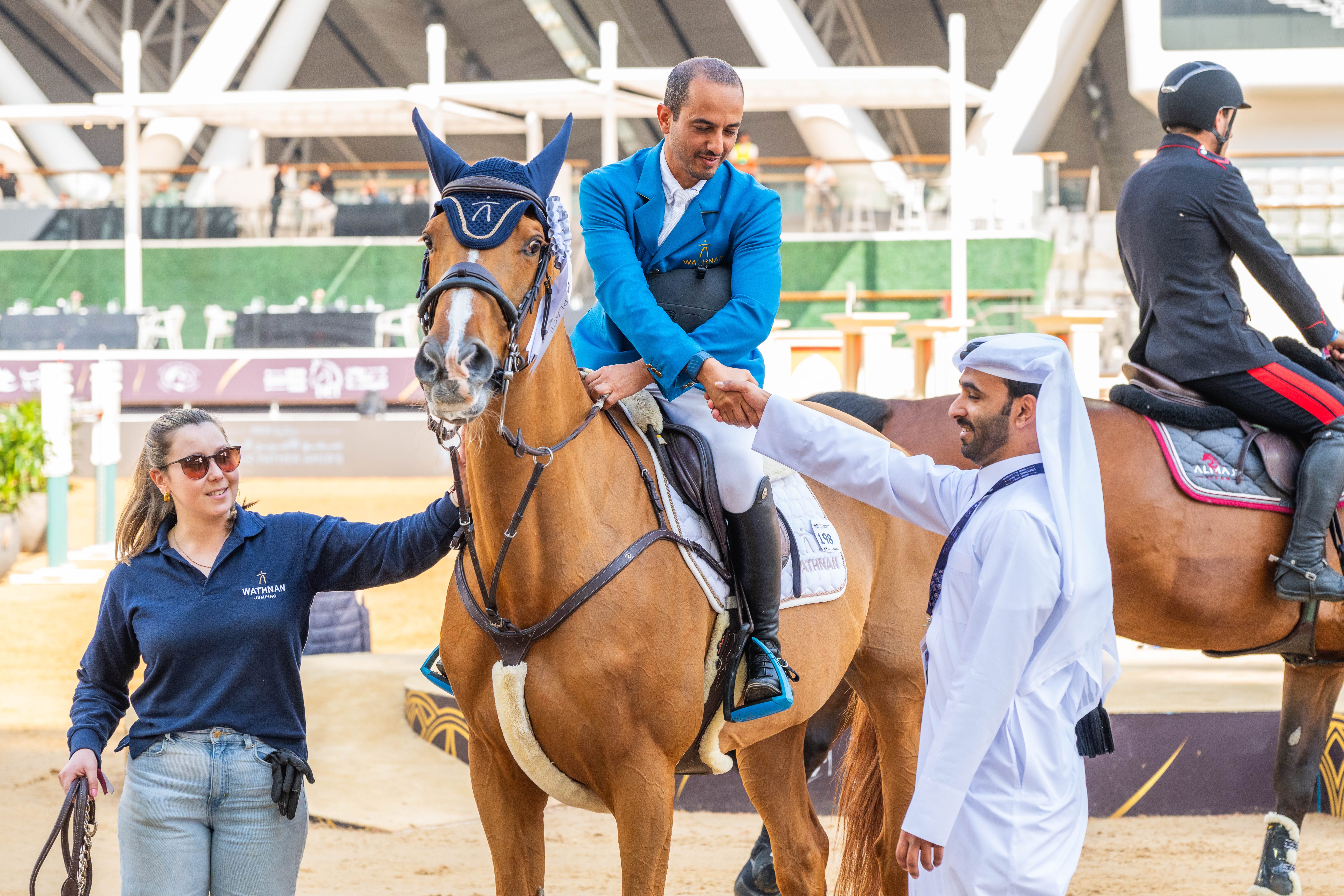
That was probably the favourite day of my career. Having Beat in the jump-off with me while he was in the lead - and then going after him and clocking a faster time - was incredible. I actually went up to him afterward and said, "Beat, I’m sorry I was faster, but you’ve really made my day because you are my idol in this sport." I was so happy just to be in the same class as him; he is truly one of the best riders in the world.
10. You’ve competed all over the world, but you often speak about the "paradise" of Al Shaqab. What is the one thing about the atmosphere in Doha that makes a horse perform differently than they do in Europe or America?
In terms of facilities, it is a genuine paradise for horses. It is top-tier. You have two massive outdoor arenas, six additional arenas for flatwork, a huge indoor arena, and a large park for conditioning. I don't believe there is another facility in the world that compares to Al Shaqab; we are very lucky to have it in Doha. The main arena is so grand that most horses grow when they enter - they rise to the challenge. Between the perfect footing and the world-class lighting, the horses always seem to perform better there than anywhere else.
11. You mentioned that you always do a "night check" on your horses before wrapping up your day. If you could give them one human "treat" or comfort for the night, what would it be?
On show days, even if I am not competing in the final class, I stay to watch and then go straight to the stables. I need to see my horses, check on them personally, and ensure everything is correct and comfortable for the next day. Only then do I head home.
12. If you had to explain the feeling of clearing a 1.60m fence to someone who has never touched a horse, what is the closest "human" feeling you would compare it to?
I would say it feels like flying to the moon. Or, for the football fans, it is like the feeling of scoring a winning goal in the 90th minute. HT
Photos courtesy of Lukasz Kowalski
* Al Ajami was born on 1 June, 1986.
** Some of his recent best results are:
1st place on Karmalensky, 2025 $70,000 Hampton Classic CSI2* Grand Prix. Faleh secured a career-defining win in Bridgehampton, New York. He produced one of only two double-clear rounds in the class, famously outpacing his childhood idol, three-time Olympian Beat Mändli, to take the top spot.
1st place on Karmalensky: 2025 $10,000 Longines Rider Challenge
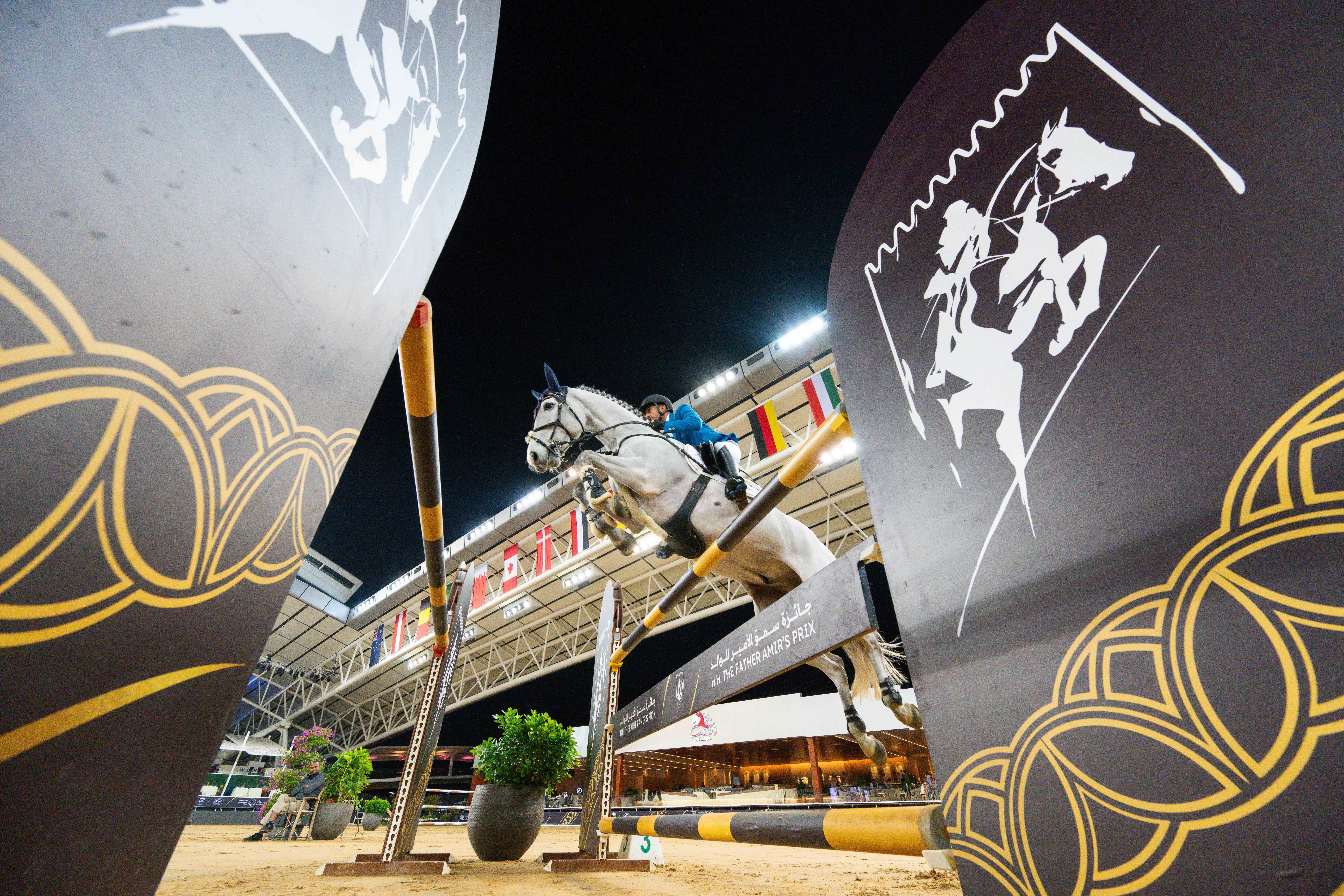
Top 10 finish on Wathnan Zodiak: 2026 HH The Father Amir’s Prix CSI3* Grand Prix at Al Shaqab
Team Gold riding Ghana: 2023 Hangzhou Asian Games
Photo Gallery
Prev 1 of 2 Next